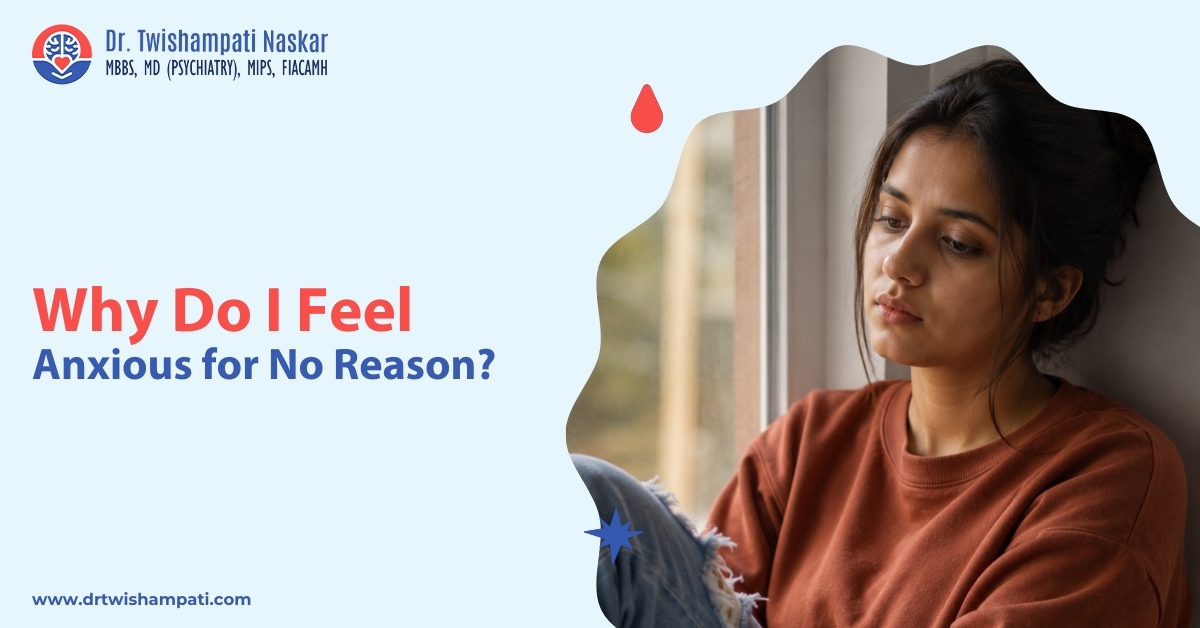



“When everything is okay, why do I still feel anxious?” Anxiety for no reason can feel confusing, especially when there is no obvious trigger or immediate danger.
Sometimes, the reason is subtle. Poor sleep, ongoing stress, caffeine, health concerns, or unresolved emotions can affect how your mind and body respond.
Feeling anxious sometimes does not mean you have an anxiety disorder. However, if the frequency or intensity of your anxiety increases or starts affecting your daily life, you should not ignore it. Speaking with a qualified mental health professional can help you understand what may be causing it and find the right support.
Why Do I Feel Anxious for No Reason?
You may suddenly feel nervous, restless, or worried even when nothing seems wrong. It can be confusing when you cannot point to anything that caused it.
Sometimes, the cause is easy to identify. Poor sleep, daily stress, too much caffeine, health worries, or emotions you have been holding in can affect how you feel. Paying attention to when the anxiety starts may help you notice a pattern.
What Are the Common Causes of Feeling Anxious Without an Obvious Reason?
Stress May Have Built Up
You do not have to be dealing with one major problem to feel anxious. Deadlines, work pressure, relationship problems, financial concerns, family responsibilities, or uncertainty about the future can add up.
You may feel like you are handling everything normally, while your body is still responding to the pressure. Anxiety can also appear after a stressful period has passed. Your mind may have been focused on getting through the situation, and the emotional reaction may show up later.
You Are Not Getting Enough Sleep
A poor night's sleep can leave you tired, irritable, and less able to handle everyday stress. If you regularly sleep too little, you may notice that small problems feel much bigger than usual.
You might also find it harder to concentrate or switch off your thoughts at night. Sleep problems and anxiety can affect each other, creating a frustrating cycle.
Caffeine or Other Substances May Be Making You Jittery
Your morning coffee may not seem connected to how you feel later in the day. But caffeine can make some people feel more restless or alert.
Pay attention to what happens after coffee, tea, energy drinks, or other caffeinated products. Alcohol can also affect anxiety and sleep.
You do not necessarily need to avoid everything. The useful question is whether you notice a pattern between what you consume and how you feel.
Your Mind May Be Carrying a Worry You Have Not Noticed
Sometimes anxiety shows up before you consciously identify the thought behind it. You may be worried about an upcoming conversation, your health, your job, a relationship, or something that could happen in the future.
You may not be actively thinking about it, but the concern can still affect how you feel. This is one reason unexplained anxiety can feel so strange. The feeling arrives first, and the reason becomes clearer later.
Past Experiences Can Still Affect You
Difficult or frightening experiences can influence how your mind responds to certain situations. A place, conversation, sound, or situation may remind you of something from the past, even if you are not consciously making that connection.
For some people, past trauma can be linked with anxiety, intrusive memories, or strong emotional reactions. If these experiences continue to affect your daily life, talking with a mental health professional can help.
A Health Problem or Medicine Could Be Involved
Anxiety-like symptoms are not always caused by stress. Some physical health conditions can produce symptoms such as a racing heartbeat, dizziness, sweating, stomach problems, or breathlessness. Certain medicines may also cause anxiety or similar side effects.
That does not mean every type of anxiety points to a medical problem. But if the feeling is new, persistent, severe, or difficult to explain, it is worth discussing with a healthcare professional rather than trying to diagnose yourself.
How Can You Identify What’s Triggering Your Anxiety?
Notice When Your Anxiety Starts
Pay attention to when and where you usually start feeling anxious. It may happen before work, after checking your phone, during social situations, or when you are trying to sleep.
Think about what was happening just before the feeling started. Even a small detail may give you a clue.
Pay Attention to Your Thoughts
Anxiety can sometimes begin with a thought that you barely notice.
You might suddenly think:
- What if something goes wrong?
- What if I cannot handle this?
- What will happen tomorrow?
- Did I make a mistake?
You do not need to stop these thoughts immediately. First, notice whether certain worries keep coming back.
Check Your Sleep, Food and Caffeine
Your body can affect how you feel. Poor sleep, skipping meals, not drinking enough water, or having too much caffeine can make you feel restless or tense.
Notice if your anxiety feels worse on days when you sleep poorly or have more caffeine.
Keep a Simple Anxiety Record
For a few days, write down when you felt anxious, what you were doing, what was on your mind, how you slept, and what you ate or drank. This may help you notice a pattern.
Look for Repeated Situations
Notice if your anxiety often happens around the same person, place, activity, or thought.
Sometimes, the situation itself is not the problem. It may be what you think will happen or how you feel about the situation.
Don’t Assume There Is One Clear Trigger
Anxiety does not always have one obvious cause. Several small worries or pressures can build up at the same time.
If anxiety keeps coming back or starts affecting your daily life, talk to a mental health professional. They can help you look at what may be causing it and suggest suitable support.
Understand the Difference Between Stress and Anxiety
|
Stress |
Anxiety |
|
Usually comes from a specific problem. |
Can happen without a clear reason. |
|
Often eases when the problem is over. |
May continue even when things are fine. |
|
You may feel tense, irritated, or under pressure. |
You may feel worried, fearful, or restless. |
|
Common triggers include work, exams, money, or family issues. |
The trigger may be hard to identify. |
|
Usually lasts as long as the stressful situation. |
May keep coming back or last for a long time. |
|
May cause headaches, tiredness, or muscle tension. |
May cause a fast heartbeat, sweating, dizziness, or breathlessness. |
What Can You Do When Anxiety Appears Suddenly?
- Slow your breathing: Take slow, steady breaths until you feel calmer.
- Ground yourself: Look around and notice what you can see and hear. Keep your feet on the floor and focus on one thing at a time.
- Move your body:Take a short walk or do some gentle stretches.
- Cut back on caffeine: If coffee, tea, or energy drinks make your anxiety worse, try having less of them.
- Keep a regular sleep routine:Try to go to bed and wake up at around the same time each day.
- Talk to someone: Tell a trusted friend or family member how you are feeling.
- Seek professional help: Talk to a mental health professional if anxiety happens often, feels severe, or affects your daily life.
When Does Anxiety Become an Anxiety Disorder?
Anxiety is normal at times. But when it happens often, is hard to control, or starts affecting your daily life, it may need attention.
Signs to watch for include:
- Worrying most days and finding it hard to relax
- Feeling anxious without a clear reason
- Having trouble sleeping because of worry
- Finding it hard to focus on work, studies, or daily tasks
- Avoiding people, places, or situations because of fear
- Having physical symptoms such as a racing heart, shaking, or trouble breathing
- Noticing anxiety affecting your relationships or daily routine
- Finding it harder to manage your anxiety over time
These signs do not always mean you have an anxiety disorder. A mental health professional can check your symptoms and help find out what may be behind them.
What Are the Different Types of Anxiety Disorders?
Generalized Anxiety Disorder (GAD):
You worry a lot about everyday things like work, health, money, or family and find it hard to stop.
Panic Disorder:
You have repeated panic attacks with symptoms such as a racing heart, dizziness, sweating, or trouble breathing. You may also fear having another attack.
Social Anxiety Disorder:
You feel very nervous about being judged or embarrassed around other people.
Phobias:
You have a strong fear of something specific, such as heights, animals, or flying.
Separation Anxiety Disorder:
You feel very worried when you are away from someone close to you.
When Should You Seek Professional Help?
You may want to seek professional help if your anxiety:
- Keeps coming back
- Is hard to control
- Affects your sleep or concentration
- Interferes with work, studies, or relationships
- Makes you avoid people, places, or activities
- Causes physical symptoms often
- Gets stronger over time
- Happens without a clear reason
- Makes daily tasks harder
- Starts affecting your daily life
A mental health professional can help you find possible causes and decide what kind of support may help.
FAQs
How Do I Stop Feeling Anxious for No Reason?
Slow your breathing, sit somewhere quiet, and focus on what is happening around you. If it happens often, talk to a mental health professional.
What Helps Calm Anxiety Immediately?
Taking slow breaths, grounding yourself, going for a walk, or talking to people whom you trust may help.
How Do I Stop My Brain From Overthinking?
Write down the thought, focus on one task, and avoid repeatedly going over the same worry.
Can Anxiety Go Away on Its Own?
Yes, mild anxiety can go away on its own, but if you notice it coming back or it starts affecting your daily life, do not ignore it.
Can Anxiety Make Me Physically Sick?
Yes. It can cause nausea, stomach discomfort, sweating, dizziness, headaches, or a fast heartbeat.
At The End
Anxiety for no reason can happen for different reasons. Stress, poor sleep, caffeine, past experiences, or changes in your health may be linked to it. Notice when the anxiety starts and what you were doing or thinking.
If anxiety keeps returning or starts affecting your daily life, consider talking to a mental health professional. Dr. Twishampati Naskar can help you understand your symptoms and decide what kind of support may be suitable for you.