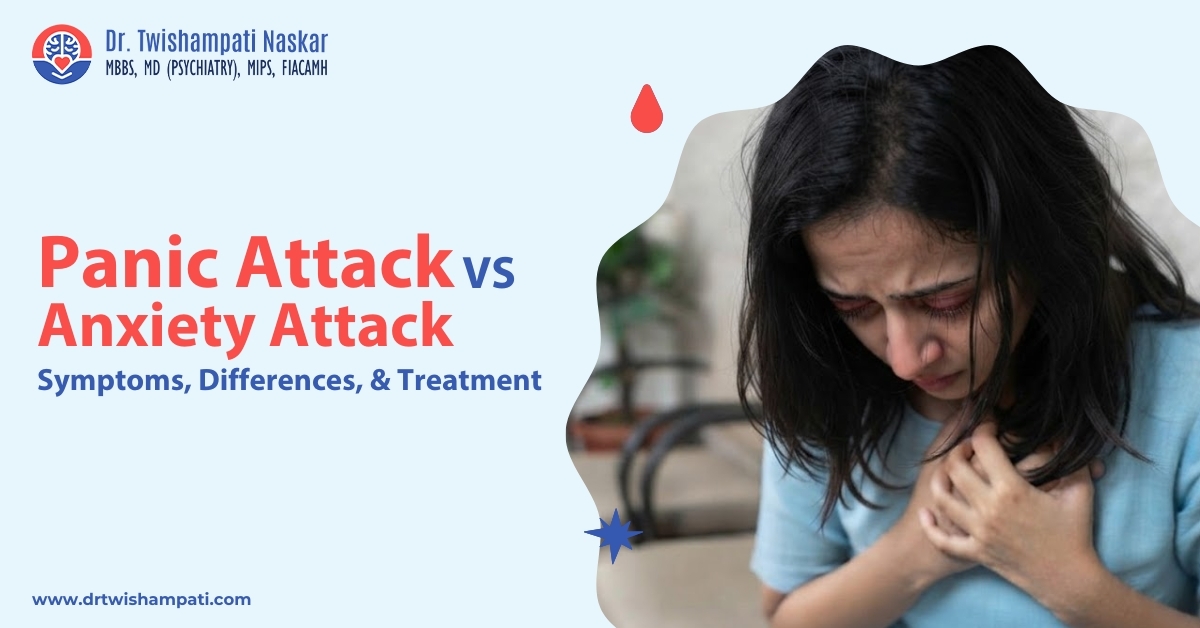



A racing heart, difficulty breathing, dizziness, or sudden fear can be frightening. You may wonder whether you are having a panic attack or an anxiety attack.
The main difference between a panic attack vs anxiety attack is how quickly the symptoms begin and how they develop over time. A panic attack often starts suddenly, while intense anxiety may build as stress and worry increase. To know more in detail the help of a psychiatrist in Siliguri like Dr. Twishampati Naskar might be taken.
Both can cause similar symptoms, but they do not always feel the same. Understanding the causes, symptoms, and treatments can help you know when to seek medical advice.
What Is the Difference Between a Panic Attack and an Anxiety Attack?
|
Panic Attack |
Anxiety Attack |
|
A sudden episode of intense fear or discomfort. |
An informal term for a period of intense anxiety. |
|
Often begins suddenly, sometimes without a clear reason. |
May build as stress and worry increase. |
|
Symptoms usually reach their peak within minutes. |
Symptoms may continue while the stress or worry remains. |
|
Can cause a racing heart, shortness of breath, sweating, shaking, and dizziness. |
May cause restlessness, muscle tension, racing thoughts, and difficulty concentrating. |
|
You may feel that you are losing control or facing immediate danger. |
You may feel overwhelmed by worries about work, relationships, health, or the future. |
|
Can happen unexpectedly or in response to a particular situation. |
Often triggered by ongoing worries or stressful situations. |
|
Panic attacks that happen often may be a sign of panic disorder. |
Ongoing anxiety that affects daily life may be a sign of an anxiety disorder. |
How to Recognise Panic Attack and Anxiety Symptoms
Symptoms of a Panic Attack
A panic attack can come on suddenly, leaving you frightened even when nothing around you seems wrong.
Common symptoms include:
- A fast or pounding heartbeat
- Trouble breathing
- Sweating or shaking
- Chest pain or tightness
- Dizziness or feeling faint
- Nausea or an upset stomach
- Tingling or numbness in your hands or feet
- Fear of losing control or dying
The symptoms usually reach their peak within minutes. After an attack, you may feel tired, shaken, or worried about it happening again.
Symptoms of an Anxiety Attack
People use the term anxiety attack when worry or fear becomes hard to handle, often during a stressful time.
You may notice symptoms such as:
- Thoughts that keep racing
- Feeling nervous or restless
- Tight muscles
- Trouble concentrating
- Getting irritated more easily
- Difficulty sleeping
- A faster heartbeat
- Sweating or shaking
- Stomach discomfort
- Worrying about what might go wrong
Panic attacks and anxiety can cause similar physical symptoms. Seek urgent medical care for severe chest pain, breathing difficulties, or fainting.
What Causes Panic Attacks and Anxiety?
Causes of Panic Attacks
A panic attack may happen during a stressful moment or come on without an obvious reason. Several factors can play a part:
- Stress: Problems at work, money worries, or difficulties in a relationship.
- Past trauma: Frightening experiences that still affect how you feel in certain situations.
- Family history: Having close relatives with panic disorder or an anxiety disorder.
- Caffeine: Too much coffee or energy drinks may cause a racing heart or shakiness.
- Poor Sleep: Not getting enough sleep can make stress harder to manage.
- Health Conditions or Medication: Certain illnesses or medicines can cause symptoms that feel like a panic attack.
Certain situations may also bring on an attack, including:
- Exams, work deadlines, or major life changes
- Crowded places or public transport
- Feeling your heart race or becoming dizzy
- Worrying about having another panic attack
The cause isn't always clear. Some people experience panic attacks without being able to identify what brought them on.
Causes of Anxiety
Anxiety can develop when you have a lot on your mind or keep worrying about what might happen.
Common causes include:
- Ongoing worries: Stress related to health, work, finances, or family.
- Major life changes: Starting a new job, moving to a new place, or losing someone close to you.
- Past experiences: Difficult events that make certain situations harder to deal with.
- Family history: Genetics may play a part in the risk of developing an anxiety disorder.
- Poor sleep and caffeine: Both can make anxiety symptoms worse.
- Health conditions: Health conditions can trigger or worsen anxiety.
If your worries are hard to control or begin affecting your daily life, speak with a healthcare professional. They can help identify what’s causing your symptoms and discuss suitable treatment options.
How Are Panic Attacks and Anxiety Diagnosed?
Diagnosis of Panic Attacks
If you experience panic attacks, your doctor will ask what happens during an episode, how often it occurs, and how it affects your daily life. Questions may include:
- When the attacks started and how long they last.
- Whether you experience a racing heart, chest discomfort, dizziness, or trouble breathing.
- Whether the attacks happen suddenly or in certain situations.
- Whether you worry about having another attack.
- Whether you avoid places or activities because of these episodes.
- Whether you take medication or have other health conditions.
Repeated, unexpected panic attacks and fear of having another one may be signs of panic disorder. Your doctor will consider your symptoms and medical history before making a diagnosis.
Diagnosis of Anxiety
To understand what you are going through, a healthcare professional may ask:
- How frequently you experience worry or feel on edge.
- How long you have felt this way and whether you can control your worries.
- Whether anxiety affects your sleep, work, or relationships.
- What tends to make you feel more anxious.
- Whether your mood or sleeping habits have changed.
- Any medicines you take and a family history of anxiety.
Your doctor may suggest a few tests to rule out other health issues, including thyroid conditions or heart-related problems. They will also consider how anxiety affects your everyday life.
What Are the Treatment Options for Panic Attacks and Anxiety?
Treatment Options for Panic Attacks
- Cognitive Behavioural Therapy (CBT): Helps you understand what brings on panic attacks and manage the thoughts and fears that come with them.
- Medication: A doctor may recommend medication if you have frequent panic attacks or panic disorder.
- Breathing Techniques: Slow, steady breathing and grounding exercises may help you cope during an attack.
- Lifestyle Changes: Getting enough sleep, exercising regularly, and reducing caffeine may help lower the chances of triggering an attack.
Treatment Options for Anxiety
- Psychotherapy: CBT can help you deal with constant worries and change thought patterns that make anxiety harder to manage.
- Medication: A doctor may prescribe medication if your anxiety is difficult to manage or affects your daily activities.
- Stress Management: Relaxation exercises and simple coping techniques may help you handle stressful situations.
- Healthy Habits: Regular exercise, enough sleep, and cutting back on caffeine may help ease anxiety symptoms.
The best approach depends on your symptoms and how they affect your life. Your doctor can help you choose a suitable approach to managing your symptoms.
When Should You Seek Professional Help?
For Panic Attacks
Consider speaking with a healthcare professional if:
- You experience panic attacks repeatedly.
- You worry a lot about having another attack.
- You start avoiding places or activities because you fear having an attack.
- Panic attacks make it difficult to sleep, work, or manage your daily routine.
For Anxiety
Consider seeking help if:
- You find it hard to control your worries.
- Anxiety affects your sleep, work, or relationships.
- You frequently feel on edge or notice physical symptoms.
- Anxiety makes everyday tasks difficult.
Get urgent medical attention for new or severe chest pain, serious breathing difficulties, or fainting. Do not assume these symptoms are caused by anxiety.
Which Professional Should You Consult for Panic Attacks or Anxiety?
If panic attacks or anxiety are affecting your daily life, the right professional can help you understand your symptoms and choose a suitable treatment.
|
Professional |
Role and Support |
|
Psychiatrist |
A medical specialist who assesses mental health concerns and provides medication when necessary. |
|
Psychologist |
Helps you manage panic attacks and anxiety through therapy, including Cognitive Behavioural Therapy (CBT). |
|
Counsellor or Therapist |
Helps you address worries, cope with stress, and build practical ways to handle difficult situations. |
|
General Physician |
Checks whether physical health problems may be causing your symptoms and refers you to a mental health specialist if necessary. |
FAQs
How can I manage panic disorder?
Panic disorder can be managed with therapy, prescribed medication, and guidance from a mental health professional. Your doctor can discuss the treatment options that suit your needs.
What can help calm anxiety naturally?
Taking a walk, practising slow breathing, and getting enough rest may help you feel calmer. You can also try cutting back on caffeine if it makes you feel more nervous.
What can I do at home during an anxiety attack?
To manage anxiety at home, sit somewhere comfortable, take slow breaths, and give yourself a moment to settle. If this keeps happening, talk to a healthcare professional.
Is it normal to cry during a panic attack?
Yes, some people cry during panic attacks when their fear becomes difficult to handle. If these episodes keep happening, speak with a mental health professional.
Conclusion
Panic attacks often come on without warning, while anxiety tends to develop gradually as worries or stress build.
Notice when your symptoms occur and how they affect your daily life. This can help your doctor understand what you are going through.
If anxiety or panic attacks disrupt your routine, a doctor can help identify the cause and suggest suitable care.
Consult Dr. Twishampati Naskar to discuss panic attack vs. anxiety attack symptoms and suitable treatment options.